

Walk into Any Factory During an Audit
An auditor asks a simple question.
Can you trace this product back to its raw material and process history?
The data exists, but the team still needs time. They check inventory, go through production logs, review quality reports, and call the shop floor.
Everything is available, just not connected.
That is where traceability in manufacturing breaks.
The Real Problem with Traceability
Most manufacturers already use ERP or MES systems. Still, traceability often fails when it matters.
The issue is not a lack of data. The issue is how that data is scattered.
Inventory tracks material. Production tracks output. Quality captures inspections. However, these systems rarely work together in real time. Teams end up switching between screens, verifying information manually, and piecing together the full story.
That delay creates problems. Root cause analysis slows down. Decisions get pushed. Audits become stressful. This is also why manufacturers focus on tracking the right quality metrics across processes
What True Traceability Looks Like
A strong traceability system connects the entire journey of a product.
At any point, you should be able to see where the material came from, how it moved through production, which machine processed it, who handled it, and what quality checks were done.
In simple terms, everything connects from material to process to machine to operator to quality.
When this flow is visible, teams stop searching and start acting.
Why Traceability Is Now Critical
Customer expectations and compliance
Customers today expect visibility, not just delivery.
If you supply to automotive, electronics, or export markets, they want consistency and proof of control. Standards such as IATF and ISO demand structured, verifiable data.
Without traceability, meeting these expectations becomes difficult. With it, you build confidence even before the audit begins.
Faster root cause analysis
When a defect appears, time matters.
In many factories, teams spend hours identifying the batch, checking the process stage, and verifying inspection results. Meanwhile, production continues, increasing the risk of further defects.
With proper traceability, the system shows the affected batch immediately and highlights where things went wrong.
For example, when a defect is found, teams can instantly trace which material lot was used, which machine processed it, and whether similar parts were produced in the same run. What used to take hours now takes minutes.
This is where a structured approach to risk prevention and failure analysis becomes critical.
Controlled recalls and risk
Without traceability, companies often block entire batches just to stay safe.
That increases cost and creates unnecessary disruption.
With traceability, teams isolate only the affected units. The response becomes precise, and the impact stays controlled.
How Traceability Works on the Shop Floor
A practical system fits into daily operations without adding extra effort.
Material is tagged during inward. It is linked to production orders. Each process captures machine and operator data. Quality checks record inspection results. The final product carries a complete history.
Because everything connects, teams can trace both backward and forward without switching systems or searching manually.
This level of visibility also improves production planning and scheduling accuracy on the shop floor.
Where Traceability Makes the Difference
Traceability plays a critical role across industries, especially where quality and compliance directly impact business outcomes.
1. Automotive Manufacturing
Traceability supports compliance, warranty tracking, and recalls. It allows manufacturers to quickly identify affected parts and respond with confidence.
2. Electronics and PCB Manufacturing (SMT and THT)
Even a small component failure can impact the entire product. Traceability helps link defects to specific reels, PCBs, or assemblies, making debugging faster and more accurate.
3. Fabrication and Sheet Metal
Tracking MS Sheets by heat number, thickness, and dimensions ensures control across cutting, welding, and finishing stages. It also helps manage rework and maintain material consistency.
4. Electrical and Wire & Cable Manufacturing
Traceability helps track conductor batches, insulation materials, and testing results. This improves compliance and ensures long-term reliability in field applications.
5. Pharma and Food Processing
Manufacturers must track raw materials, processing conditions, and expiry details. Traceability ensures product safety and enables quick action during contamination risks.
6. Machinery and Equipment Manufacturing
Products go through multiple assembly stages. Traceability helps track each component used, which improves service tracking and maintenance visibility.
7. Furniture and Custom Manufacturing
Traceability helps maintain consistency across batches and custom orders. It ensures that materials, finishes, and processes can be tracked for repeat production.
8. Battery and EV Component Manufacturing
Traceability helps track cells, modules, and performance data. This is critical for safety, especially in high-risk applications like EV batteries.
How Traceability Helps You Work with Global Customers and Pass Audits
Traceability is not just an internal system. It shapes how customers evaluate your factory.
For international and high-value customers, traceability is often a basic requirement. They expect clear visibility into material, process, and quality data before they trust a supplier.
Without it, even capable manufacturers struggle to qualify.
With strong traceability, you can confidently show how every product was built. This builds trust and makes it easier to work with automotive OEMs, electronics companies, and export clients.
The same applies to audits.
Instead of preparing data manually, teams can access structured information instantly. You can trace backward and forward within seconds, demonstrate process control, and respond without delays.
Over time, audits stop being stressful events and become routine checks.
How Traceability Connects with ERP and MES
Traceability becomes powerful when systems work together.
ERP manages inventory and orders. MES tracks production. Quality systems capture inspection data.
When these systems are connected, data flows in real time. Planning becomes more accurate. Inventory reflects actual conditions. Quality decisions happen faster.
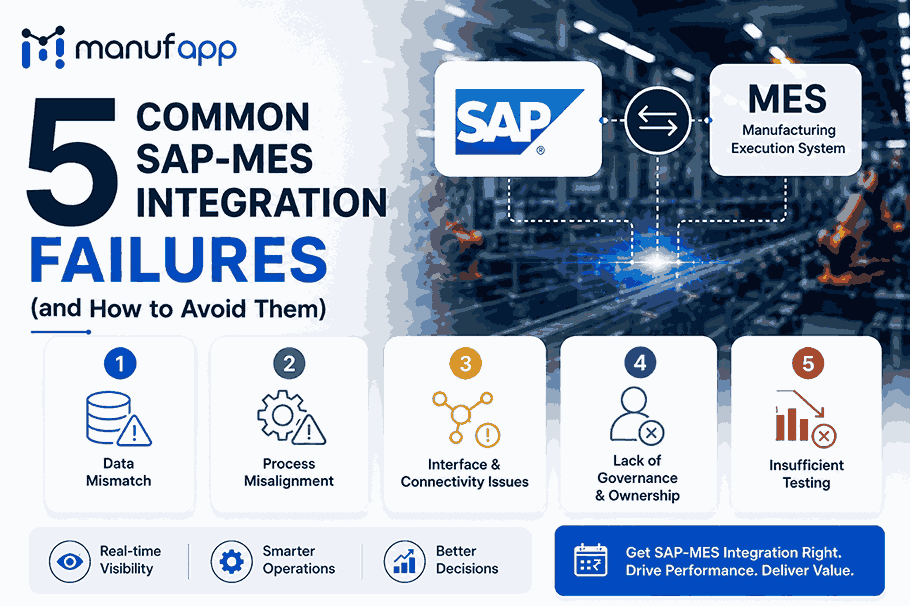
This is why modern factories rely on integrated ERP and MES systems for better visibility and control.
Why Most Traceability Efforts Fail
Many implementations fail because they are too manual or too complex.
Teams are asked to enter too much data. Systems are not connected. Processes are difficult to follow.
Successful implementations keep things simple. They rely on scanning, capture data in real time, and connect inventory, production, and quality in a single flow.
When the system is easy to use, adoption follows naturally.
Conclusion
Traceability in manufacturing is no longer just about compliance.
It defines how well a factory operates under pressure.
When data is connected, teams respond faster, make better decisions, and build stronger customer trust. When it is not, even simple questions take time to answer.
That gap is what separates reactive factories from controlled ones.
Want to See Traceability in Action
If you are facing audit pressure or recurring quality issues, it is worth exploring a connected system.
Book a demo with ManufApp to see how traceability works across ERP and MES on the shop floor.