

Walk into any factory today and you’ll feel it immediately. AI is no longer a future concept. It’s already part of daily operations. Machines run smarter, decisions happen faster, and teams don’t scramble the way they used to when something unexpected hits the floor.
As we move into 2026, manufacturers are using AI to handle challenges that were once extremely hard to manage — predicting failures, balancing machine loads, improving yield, and keeping resources aligned with real shop-floor activity.
Instead of talking about AI in theory, let’s look at how it’s being used in practice.
1. Predictive Maintenance: Stop Failures Before They Happen
AI continuously reads machine behavior — temperature changes, vibration patterns, power loads — without fatigue.
What this means on the floor:
- Early warnings before breakdowns occur
- Maintenance based on actual condition, not just schedules
- Healthier machines and far less unplanned downtime
Related read:
Predictive Maintenance in Manufacturing
2. AI-Driven Quality Inspection
Vision-based AI detects scratches, misalignments, missing components, and surface defects that are easy to miss after long shifts.
In real terms, this allows you to:
- Catch defects the moment they appear
- Feed results directly into quality and CAPA workflows
- Reduce rework and ship consistent quality
Explore more:
Top 10 KPIs in Quality for Manufacturing
3. Demand Forecasting and Inventory Optimization
AI studies sales trends, seasonality, lead times, and supplier behavior to generate realistic demand forecasts.
This helps manufacturers:
- Place purchase orders at the right time
- Avoid overstocking or last-minute shortages
- Align inventory closely with real production consumption
4. Intelligent Production Planning and Scheduling
AI-driven scheduling balances machines, workforce, and delivery dates dynamically. When disruptions happen, plans adjust instantly.
On a practical level, this means:
- Quick job reallocation when machines go down
- Priority-based sequencing for urgent orders
- Reduced idle time and better capacity utilization
Related read:
Top 10 KPIs in Production Management Every Manufacturer Should Track
5. Generative Design and Process Optimization
AI simulations test thousands of design and process combinations to find the most efficient option.
This enables teams to:
- Reduce setup time and material waste
- Optimize tool paths, layouts, and cycle times
- Launch new products with fewer trial runs
- Improve first-pass yield and energy efficiency
6. Digital Twins and Virtual Simulation
Digital twins act as safe testing environments for the factory.
Teams use them to:
- Simulate production changes without disrupting live operations
- Identify bottlenecks before they affect output
- Shorten commissioning and stabilization time
7. Supply Chain and Procurement Intelligence
AI tracks supplier performance, delivery reliability, and pricing trends to flag risks early.
This allows manufacturers to:
- Anticipate supplier delays
- Respond proactively to price fluctuations
- Stabilize planning cycles despite uncertainty
8. Energy Efficiency and Sustainability Optimization
AI monitors energy consumption in real time and highlights hidden inefficiencies.
This helps teams:
- Understand true energy cost per unit
- Shift heavy operations to off-peak hours
- Reduce waste and support sustainability goals
9. AI Assistants and Voice-Driven Operations
Voice-based AI removes the need for typing on the shop floor.
In practice, teams can:
- Log breakdowns or inspections verbally
- Create maintenance tickets hands-free
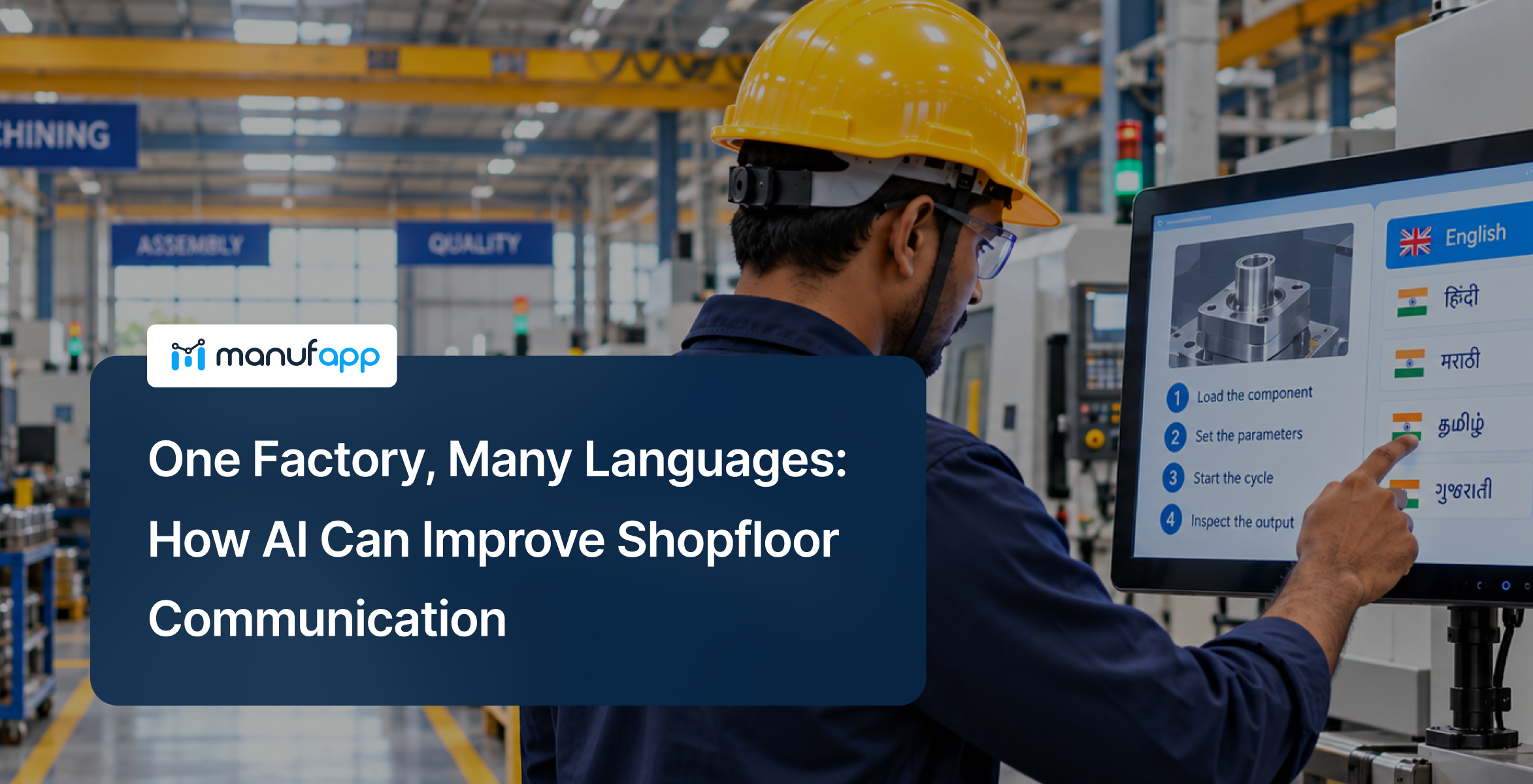
- Support multilingual operators with accurate transcription
10. Root Cause Analysis for Continuous Improvement
When problems repeat, AI analyzes historical data to identify patterns humans often miss.
This makes it possible to:
- Spot recurring quality or downtime issues
- Trace problems to specific machines, shifts, or batches
- Fix root causes using evidence, not assumptions
Explore more:
Top 10 Manufacturing ERP Software Solutions for 2025
Conclusion
AI is no longer something manufacturers are preparing for. It’s already shaping maintenance, quality, planning, scheduling, and decision-making across the shop floor.
When these AI capabilities are embedded into ERP and MES platforms like ManufApp, factories become more connected, more responsive, and far easier to run. Decisions get sharper. Operations stay flexible. And teams spend less time reacting — and more time improving.