

Switchgear production planning becomes difficult when every order has different ratings, enclosure sizes, component requirements, wiring logic, testing needs and delivery commitments. Unlike standard mass production, switchgear and LT panel manufacturing usually works around project-based orders, customer drawings and frequent design changes.
A factory may receive one order for an MCC panel, another for a PCC panel, another for a distribution board and another for a custom control panel. Each order may need different sheet metal work, busbar preparation, bought-out components, wiring, assembly and final testing.
Because of this, planning cannot depend only on Excel sheets, verbal updates and manual follow-ups. As order volume increases, teams need better control over material availability, production stages, quality checks and dispatch readiness. This is where a manufacturing ERP/MES system like ManufApp can help connect planning, inventory, production and quality information in one workflow.
Why Planning Becomes Difficult in Switchgear and LT Panel Manufacturing
Switchgear and LT panel manufacturing has a mix of engineering, fabrication, assembly, wiring and testing. Each stage depends on the previous one.
For example, panel assembly cannot start properly if the enclosure is not ready. Wiring cannot move smoothly if components are missing. Testing gets delayed if documentation, inspection records or customer-specific requirements are not available on time.
In many factories, the planning team prepares a schedule based on expected material and production capacity. However, the actual shopfloor condition may be different. Some components may still be pending from purchase. A drawing revision may change the BOM. Powder coating may be delayed. A vendor may not return a jobwork item on time.
As a result, the plan looks fine on paper but fails during execution.
This is why manufacturing ERP for the switchgear industry should focus on real production control, not only order entry and billing.
What Manual Planning Really Costs on the Shopfloor
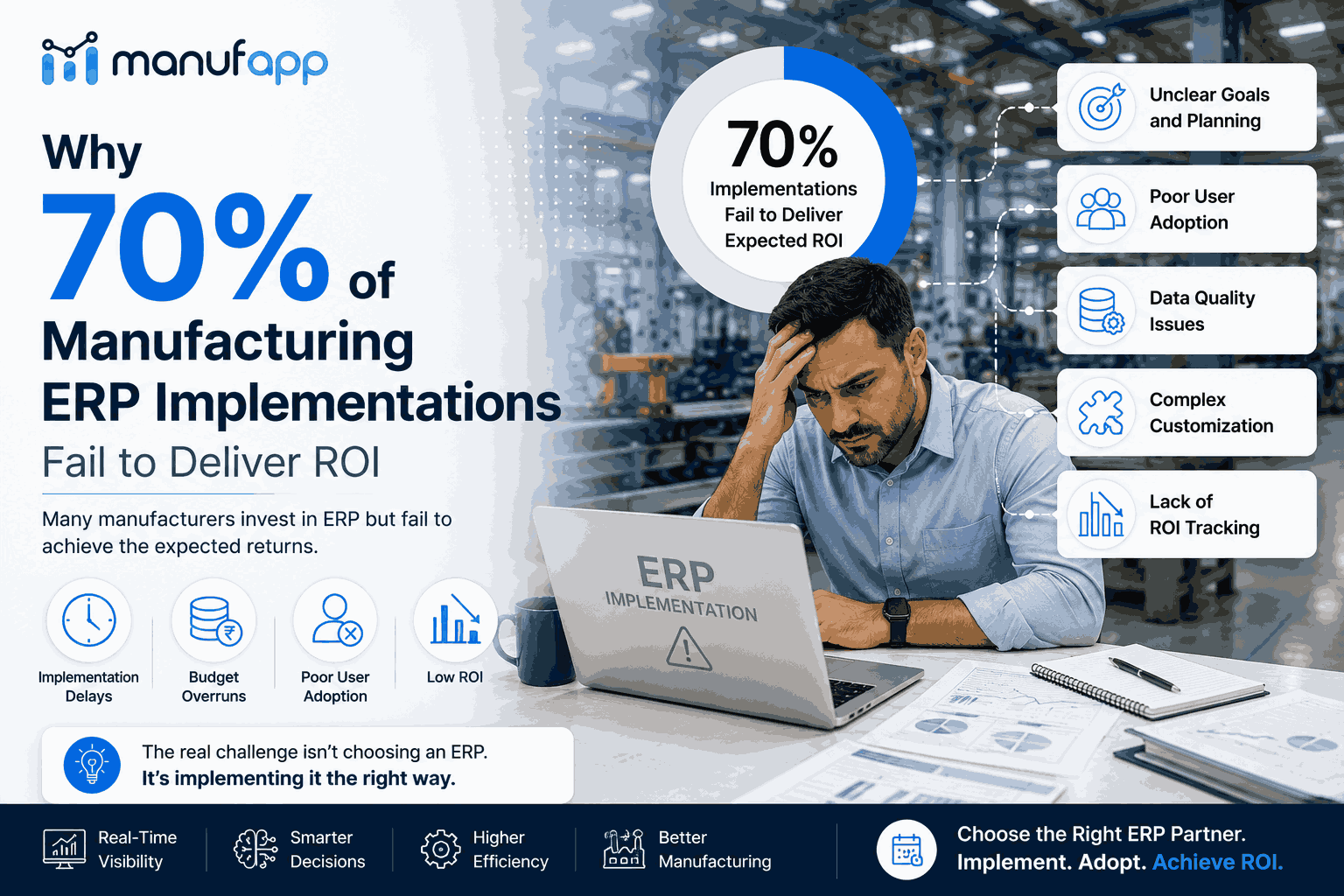
Manual planning works when the factory has fewer orders and limited product variation. But once multiple panels, customers and projects run together, gaps start appearing.
The common issue is not that teams are careless. The real problem is that information is scattered.
Purchase has one update. Stores has another. Production supervisors know the actual stage status. Quality has inspection remarks. Dispatch has customer priority. Management sees a different version in a summary sheet.
Because of this, small gaps become daily firefighting.
A missing MCCB can stop assembly. A delayed enclosure can block wiring. A wrong busbar size can create rework. A panel may be physically ready but not cleared by quality. Another order may be dispatched late because packing status was not visible.
Over time, these issues increase overtime, WIP, rework, follow-ups and customer pressure.
Planning Problems That Delay Switchgear and LT Panel Orders
1. Order-wise BOM Changes Are Difficult to Control
Switchgear manufacturing depends heavily on customer specifications. Even two panels with the same broad category may have different ratings, brands, meters, protection devices, feeder counts, wiring logic and enclosure requirements.
A small BOM change can affect purchase, stores, production and costing. For example, if the customer changes a component brand after order confirmation, the planning team must know whether the old component was already purchased, whether the new component is available and whether production can continue without delay.
In a manual system, this information is usually tracked through calls, messages and revised Excel files. That creates confusion.
An ERP system helps by keeping order-wise BOM, material requirement and procurement status connected. The planning team can see what is required, what is available, what is short and what may delay the order.
2. Material Shortages Are Found Too Late
In LT panel manufacturing, many delays happen because bought-out components are not available at the right time.
This includes breakers, relays, meters, CTs, contactors, terminals, fans, indicators, cable glands and other electrical items. Sheet metal, copper or aluminium busbars and hardware also need proper planning.
The issue is that shortages are often noticed only when assembly starts. By then, the purchase team may not have enough lead time. Production waits. Supervisors shift workers to another panel. The original plan gets disturbed.
A better planning process checks material availability before releasing work to the shopfloor. For more detail, this guide on production planning in manufacturing ERP explains how demand, material and execution can be connected.
3. Stage-wise Production Status Is Not Clearly Visible
A switchgear order moves through many stages. These may include design release, sheet metal fabrication, busbar cutting and bending, powder coating, component mounting, wiring, assembly, inspection, testing, packing and dispatch.
When multiple orders run together, managers need to know exactly where each order is stuck.
The planning team may know that an order is “in production”, but that is not enough. They need to know whether fabrication is pending, wiring is in progress, testing is delayed or packing is waiting.
Without stage-wise visibility, follow-up becomes broad and reactive. ERP/MES improves this by capturing production status at each stage, so teams can track planned work, completed work and bottlenecks more clearly.
4. Capacity Planning Is Often Based on Assumptions
In panel manufacturing, capacity is not only about machines. It also depends on skilled manpower, wiring benches, testing availability, fabrication load, powder coating dependency and engineering release.
A planner may commit a delivery date assuming that the shopfloor has enough time. However, the real bottleneck may be wiring manpower or testing capacity.
For example, five panels may be mechanically ready, but only two can be tested in a day because testing requires specific people, instruments and documentation.
A practical capacity planning in manufacturing approach helps teams compare demand with available capacity before committing timelines.
5. Quality and Testing Delays Affect Dispatch
Switchgear and LT panels need proper quality control because the final product directly affects electrical safety and performance.
Visual inspection, wiring checks, continuity checks, insulation resistance testing, functional testing and customer-specific inspection points may be required before dispatch.
The problem starts when quality checks are treated as the last step only. If defects are found late, the panel may return for rework. This delays packing and dispatch.
ERP/MES systems help by recording inspection points, rejection reasons and rework status. This makes quality part of the production flow instead of a separate last-minute activity.
6. Dispatch Readiness Is Not Always Clear
A panel may look ready, but dispatch may still be blocked.
The reason could be pending testing approval, missing documents, incomplete packing, customer hold, transport dependency or accessory shortage.
Better dispatch control means every order should clearly show whether it is ready, under testing, packed, on hold or dispatched. This improves customer communication and reduces last-minute confusion.
How ERP/MES Connects Planning With Actual Execution
ERP/MES does not solve planning problems by creating a schedule only. It solves them by connecting the schedule with actual execution.
The planning team needs to know what orders are pending, what material is available, what production stage is active, what quality checks are pending and what can be dispatched.
When this data is connected, planning becomes more realistic. Before releasing a panel for assembly, the system can show whether major components are available. During production, supervisors can update stage-wise progress. Quality can record inspection results. Dispatch can see which panels are cleared and packed.
This reduces dependency on manual follow-up and gives management a single view of order progress.
What Better Production Control Looks Like
Good control in switchgear and LT panel manufacturing means the factory can quickly answer:
Which orders are due this week?
Which panels are waiting for material?
Which orders are stuck in fabrication, wiring or testing?
Which components are delaying production?
Which panels are ready for dispatch?
When these answers are available, teams can act faster.
Inventory becomes more reliable because stock is linked to actual order requirements. Production becomes easier to track because every stage has a clear status. Quality becomes more structured because inspection records are connected to the order. Dispatch becomes more predictable because readiness is visible before the delivery date.
Strong traceability in manufacturing also helps during customer complaints, audits and service issues.
Connecting Planning, Inventory, Production, Quality and Dispatch
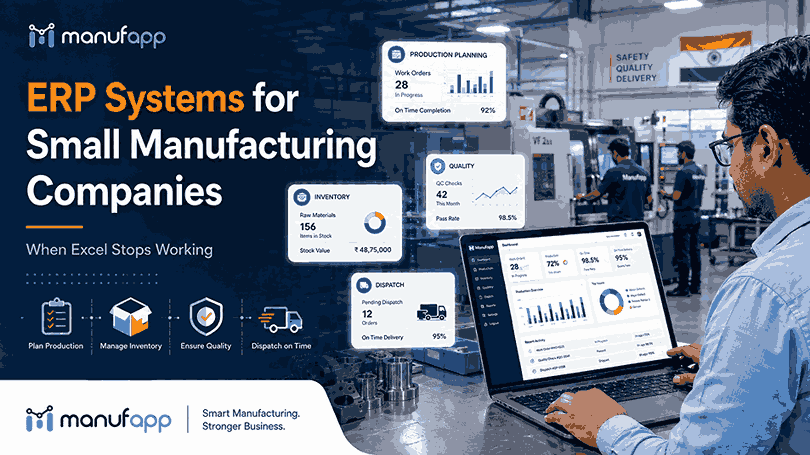
ManufApp helps manufacturers connect planning, inventory, production, quality and dispatch in one manufacturing system.
For switchgear and LT panel manufacturers, this means teams can move away from scattered Excel sheets and delayed manual updates. The focus shifts to order-wise visibility, material readiness, stage-wise tracking, inspection control and dispatch coordination.
It also helps different teams work with the same information. Planning, stores, production, quality and dispatch can see the order status from their own angle without losing the overall picture.
Practical Improvements Manufacturers Can Expect
Better Delivery Commitment – When material availability and production progress are visible, delivery dates become more realistic. Teams can identify risky orders early and take action before the customer starts following up.
Lower Production Delays – Many delays happen because shortages or bottlenecks are found late. A connected system helps teams catch these issues earlier.
Improved Shopfloor Coordination – Supervisors can focus on actual execution instead of spending time giving repeated updates. Stage-wise visibility also helps planners understand where work is moving and where it is stuck.
Better Quality Control – Inspection records, rejection reasons and rework status give better control over quality issues. Over time, this helps teams identify repeated problems and improve process discipline.
More Reliable Planning KPIs – Manufacturers should track planning performance regularly. Metrics like schedule adherence, order delay, production backlog and material shortage impact can show where planning needs improvement. This article on planning and scheduling KPIs gives useful examples.
Making Switchgear Production Planning More Executable
Switchgear production planning is challenging because every order has technical variation, material dependency, stage-wise execution and quality requirements. Manual planning may work for a small number of orders, but it becomes risky when the factory handles multiple projects, urgent deliveries and frequent changes.
The goal is not only to create a plan. The goal is to make the plan executable.
A manufacturing ERP/MES system helps by connecting demand, BOM, inventory, production, quality and dispatch. With ManufApp, switchgear and LT panel manufacturers can build better visibility across the full workflow and reduce the daily firefighting that slows down delivery.